
I just read “Nurture Shock” by Bronson & Merryman. It may be another book to add to your list of parenting books to read, but quite honestly, I wasn’t “wow-ed” by it.
Each chapter sets out to “shock” parents by dispelling accepted beliefs.
In a nutshell,
Chapter 1 – says “when we praise children for their intelligence…we tell them that this is the name of the game: look smart, don’t risk making mistakes.” (14)
Makes sense to me. Labeling kids is bad no matter how you label them. And over praising them makes them want to hear more praise from you instead of making them want to do something just for the value of doing it.
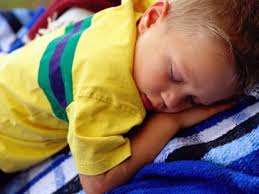
Chapter 2 – says “because children’s brains are a work in progress until the age of 21…this lost hour [of sleep] appears to have an exponential impact on children that it simply doesn’t have on adults.” (31) “Sleep disorders can impair children’s IQ as much as lead exposure.” (33)
Again, this makes sense to me. I’ve always been really strict about the amount of sleep my kids get. Sleep restores health, allows the body and mind to grow, and makes us feel refreshed and ready for a new day. It is also a great cure for a crabby kid. Any extra IQ points for a good night sleep is just an added bonus in my book.

Chapter 3 – says “it’s important for parents to know that merely sending your child to a diverse school is no guarantee they’ll have better racial attitudes than children at homogenous schools.” (59) “The unfortunate twist of diverse schools is that they don’t necessarily lead to more cross-race friendships. Often it’s the opposite.” (60)
Phew, because it’s pretty homogenous here in my suburb and in many thousands of suburbs across America! The important thing for parents is to model good race relations.

Chapter 4 – reminds us that we all lie a lot. It also suggests that “kids who start lying at two or three…do better on tests of academic prowess. Lying is related to intelligence.” (82) This chapter also reminds us that “parents need to teach kids the worth of honesty just as much as they need to say that lying is wrong.” (86)
I think this is an especially good point because so often when you ask a kid why they shouldn’t lie, they will say because they might get caught and punished. I find it so sad that this is the explanation instead of something like, because it hurt someone else.
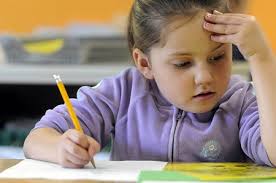
Chapter 5 – says “the identification of very bright kids in kindergarten or first grade is not on too thick of ice…the IQ measures aren’t very accurate at all.” (101) “The problem is that young kids’ brains just aren’t done yet.” (98)
Of course! I always tell my kids not to peak too early because the best is yet to come.

Chapter 6 – talked about how often siblings fight. It also says that “for the most part, the tone established when they were very young, be it controlling and bossy or sweet and considerate, tended to stay that way.” (121) And, older and younger children “all said sharing physical possessions…caused the most fights.” (127)
Well, this wasn’t big news to me, but the next part was interesting:
“The kids who could play in a reciprocal, mutual style with their best friend were the ones who had good rapport with their younger sibling, years later.” (129) And, that “fantasy play represents one of the highest levels of social involvement for young children.” (129)

Chapter 7 – talks about how often teens lie to their parents and “the most common reason for deception is that teens are “trying to protect the relationship with [their] parents; [they] don’t want them to be disappointed in [them].” (139) This chapter tells us that the best type of parent to be is one who is consistent with rules, but also warm and loving, and open to having many conversations with their kids.
Again, this wasn’t shocking news to me, but the chapter is filled with other information about teens that is helpful, reaffirming and worth reading.
Chapter 8 – talks about a successful program called “Tools of the Mind” that is being used in preschools and kindergartens and helps young children master self-control. The teachers of the program ask children to come up with a written plan for the day followed by a lengthy fantasy play period. This program “is designed to encourage the early development of this Socratic consciousness, so that kids don’t just react impulsively in class, and they can willfully avoid distraction.” (167) Tools also involves a lot of student choice.
Tools of the Mind sounds a bit like Montessori and also like a style of learning called “active learning” I witnessed when I worked for the HighScope Educational Research Foundation. There, the preschoolers would base their day around a “plan-do-review” model which I think works well for ANY age group, in ANY educational setting.

Chapter 9 – says that “modern involved parenting should seem to result in a sea of well-mannered, nonaggressive kids” (182) but that some of the parenting we’re doing is detrimental, like letting kids watch many hours of “educational” TV programs like Arthur where a lot of the show is dedicated to setting up a conflict and only a few minutes at the end resolve the conflict. “Preschoolers have a difficult time being able to connect information at the end of the show to what happened earlier….[and] the “more educational media the children watched, the more relationally aggressive they were.” (180)
OK, this was news to me, as was “watching educational television also increased the rate of physical aggression, almost as much as watching violent TV.” (181)
In this chapter they also talk about how it’s ok for children to see their parents argue as long as they also see the resolution of the argument. In fact, they claim, it’s healthier for them to see a resolved argument between parents than none at all.
Chapter 10 – says that Baby Einstein DVDs are basically worthless for helping babies learn language because babies must “learn from a live, human teacher.” (202) And, a “well-timed, loving caress” is just as important when communicating with your baby as is language. “How a parent responds to a child’s vocalizations…seems to be the most powerful mechanism pulling a child from babble to fluent speech.” (209)
Well, this doesn’t seem like a shocking discovery, but it’s good information for new parents and worth reading this chapter if you are curious about language development.
Even though I wasn't shocked by most of the findings in this book, I still recommend it.


