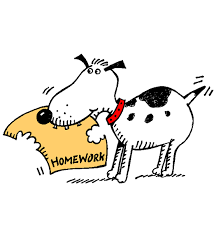
1. If homework can be copied, it is bad homework.
Most kids will cheat on homework if they can. Why not? It usually feels like a waste of their time, especially if the teacher just checks it off and doesn’t give constructive feedback on it.
What kind of homework can be cheated on? Fill in the blanks, word searches, crossword puzzles, end of chapter summaries, math problems, etc.
What kind of homework cannot be copied or done by someone else for you? Reading for pleasure, personal journal entries, & studying for a quiz or test.
What kind of homework is good homework? Homework that turns the students on to whatever it is they are learning. This could include just about any type of homework, but typically it will involve: working on something of interest to the student that they can do on their own (or with a classmate) that they have plenty of time to complete, like a really creative, student-driven project. This may also include reading for pleasure (if they enjoy reading) and writing for pleasure (if they enjoy writing).
But how will a teacher know if a student understands material if she doesn’t give worksheets and chapter summaries? Instructional devices like work sheets, writing and reading exercises, and discussions are formative assessments teachers should use during class time. These learning activities are practice for students and will help the teacher evaluate her instruction. If these activities come home as homework, the teacher doesn’t have a true gauge of the student’s learning because someone else can do the work for the student. See this article: “To Grade or Not to Grade Homework”
2. If homework must be given, make it the exception, not the rule, and please make it creative.
If teachers occasionally must assign homework, it should be teacher designed (not copied out of a text book or a work sheet).
This tip is from one of Alfie Kohn’s articles: “Changing the Homework Default”
“Assign only what you design. In most cases, students should be asked to do only what teachers are willing to create themselves, as opposed to prefabricated worksheets or generic exercises photocopied from textbooks. Also, it rarely makes sense to give the same assignment to all students in a class because it’s unlikely to be beneficial for most of them. Those who already understand the concept will be wasting their time, and those who don’t understand will become increasingly frustrated. There is no perfect assignment that will stimulate every student because one size simply doesn’t fit all. On those days when homework really seems necessary, teachers should create several assignments fitted to different interests and capabilities. But it’s better to give no homework to anyone than the same homework to everyone."
3. If homework must be given, do NOT grade it.
Students tell me they must do their homework because they cannot lose points. What is wrong with this statement? Wouldn’t it be ideal if students said they had to do their homework because otherwise they wouldn’t understand something they were supposed to be learning in school? Or, better yet, that they wanted to do their homework because it was so interesting to them and they were really getting excited about something they were learning in school.
When teachers make homework about points and grades, the emphasis on learning disappears and students begin to focus on grades instead of the content of the subject. Additionally, “of all student work, homework assignments are the most likely to receive zeros. The accumulation of zeros can unfairly skew the total grade far below the total grade as indicated by tests. And, the effects of zeros on beginning learners can place many dangerously at-risk. Failure does not motivate, but frustrates and discourages.”
Read more at Suite101: To Grade or Not to Grade Homework: Homework is for Diagnosis and Practice http://skill-assessment.suite101.com/article.cfm/homework_to_grade_or_not_to_grade#ixzz0obxKE7uk
Your thoughts on any of these 3 homework observations?


